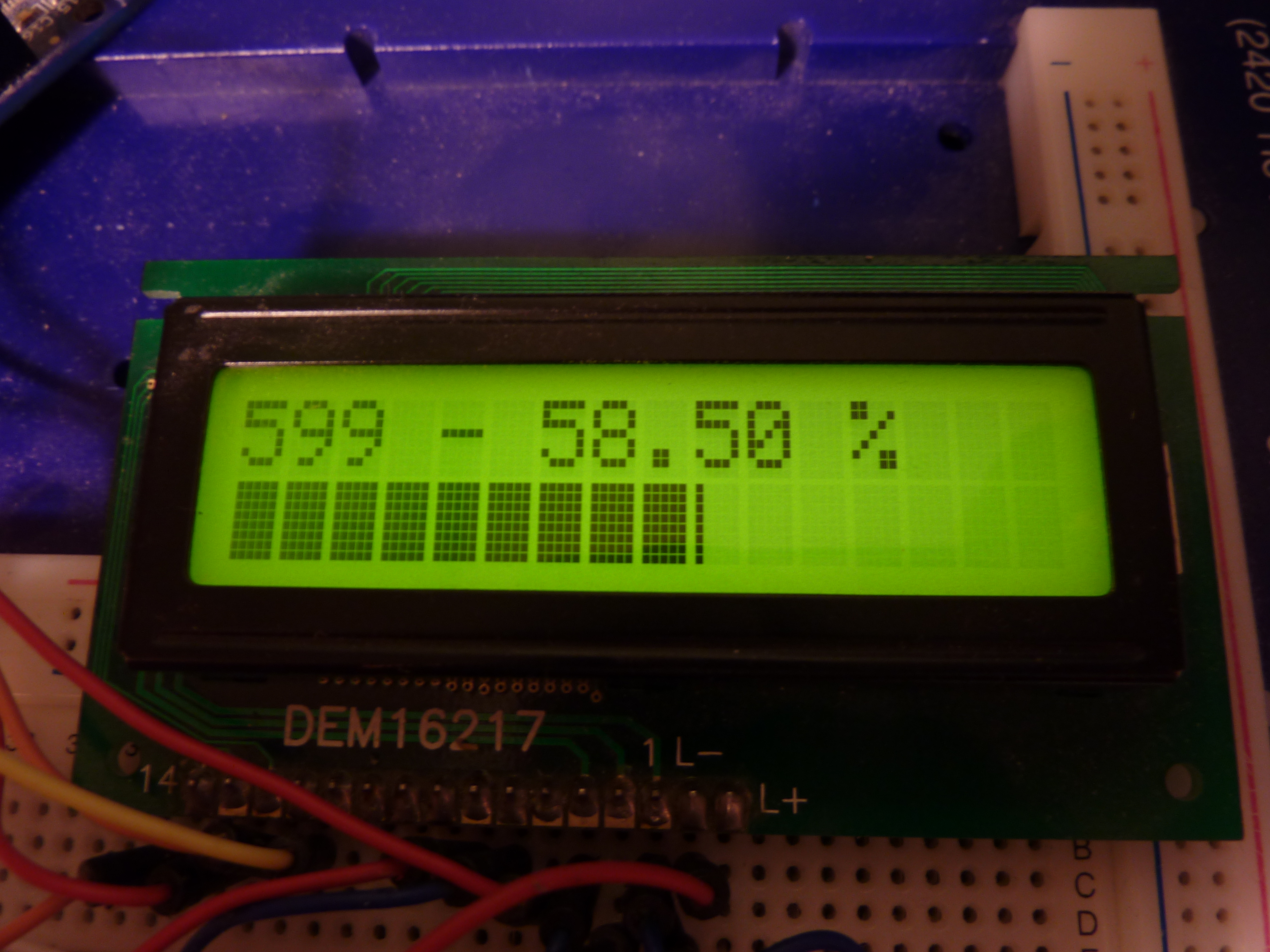
LCD in this picture has 2×16 characters, so in quick way horizontal bar could have 16 steps resolution, but it’s not enough. Each character is formed from 5×8 pixels. Every character can be sliced in to 5 pieces. After that we can have 5*16 = 80 steps.
First step is to create 5 custom characters. More about createChar() please read at arduino.cc.
Each custom character is specified by an array of eight bytes. Byte represents character’s row.
byte p1[8] = {
  0x10,
  0x10,
  0x10,
  0x10,
  0x10,
  0x10,
  0x10,
  0x10};

byte p2[8] = {
  0x18,
  0x18,
  0x18,
  0x18,
  0x18,
  0x18,
  0x18,
  0x18};

byte p3[8] = {
  0x1C,
  0x1C,
  0x1C,
  0x1C,
  0x1C,
  0x1C,
  0x1C,
  0x1C};

byte p4[8] = {
  0x1E,
  0x1E,
  0x1E,
  0x1E,
  0x1E,
  0x1E,
  0x1E,
  0x1E};

byte p5[8] = {
  0x1F,
  0x1F,
  0x1F,
  0x1F,
  0x1F,
  0x1F,
  0x1F,
  0x1F};
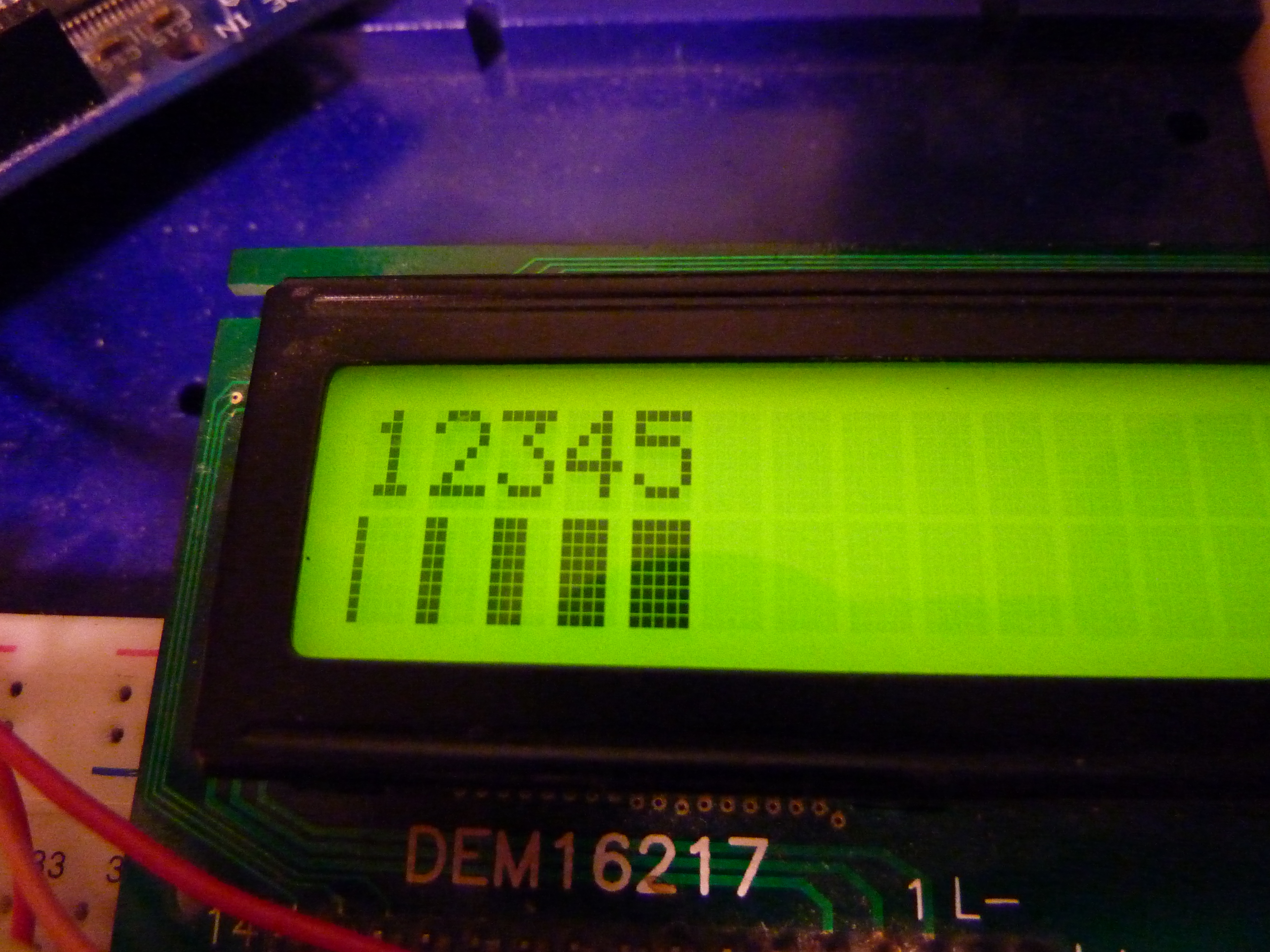
These characters look like this:
In progress bar demo ADC conversion value is showed
All code
//https://www.electronicsblog.net/
//Arduino LCD horizontal progress bar using custom characters
#include <LiquidCrystal.h>
#define lenght 16.0
double percent=100.0;
unsigned char b;
unsigned int peace;
// custom charaters
LiquidCrystal lcd(12, 11, 5, 4, 3, 2);
byte p1[8] = {
0x10,
0x10,
0x10,
0x10,
0x10,
0x10,
0x10,
0x10};
byte p2[8] = {
0x18,
0x18,
0x18,
0x18,
0x18,
0x18,
0x18,
0x18};
byte p3[8] = {
0x1C,
0x1C,
0x1C,
0x1C,
0x1C,
0x1C,
0x1C,
0x1C};
byte p4[8] = {
0x1E,
0x1E,
0x1E,
0x1E,
0x1E,
0x1E,
0x1E,
0x1E};
byte p5[8] = {
0x1F,
0x1F,
0x1F,
0x1F,
0x1F,
0x1F,
0x1F,
0x1F};
void setup() {
delay(100);
lcd.createChar(0, p1);
lcd.createChar(1, p2);
lcd.createChar(2, p3);
lcd.createChar(3, p4);
lcd.createChar(4, p5);
lcd.begin(16, 2);
}
void loop()
{
lcd.setCursor(0, 0);
//ADC conversion
unsigned int value = analogRead(0);
percent = value/1024.0*100.0;
lcd.print(value);
lcd.print(" - ");
lcd.print(percent);
lcd.print(" % ");
lcd.setCursor(0,1);
double a=lenght/100*percent;
// drawing black rectangles on LCD
if (a>=1) {
for (int i=1;i<a;i++) {
lcd.write(4);
b=i;
}
a=a-b;
}
peace=a*5;
// drawing charater's colums
switch (peace) {
case 0:
break;
case 1:
lcd.write(0);
break;
case 2:
lcd.write(1);
break;
case 3:
lcd.write(2);
break;
case 4:
lcd.write(3);
break;
}
//clearing line
for (int i =0;i<(lenght-b);i++) {
lcd.print(" ");
}
;
}
[/code]
<strong>Update for Arduino IDE 1.0 and newer version users</strong>
[code lang="arduino"]lcd.write(0);
leads to “call of overloaded ‘write(int)’ is ambiguous” error, so please replace it to
lcd.print((char)0);
